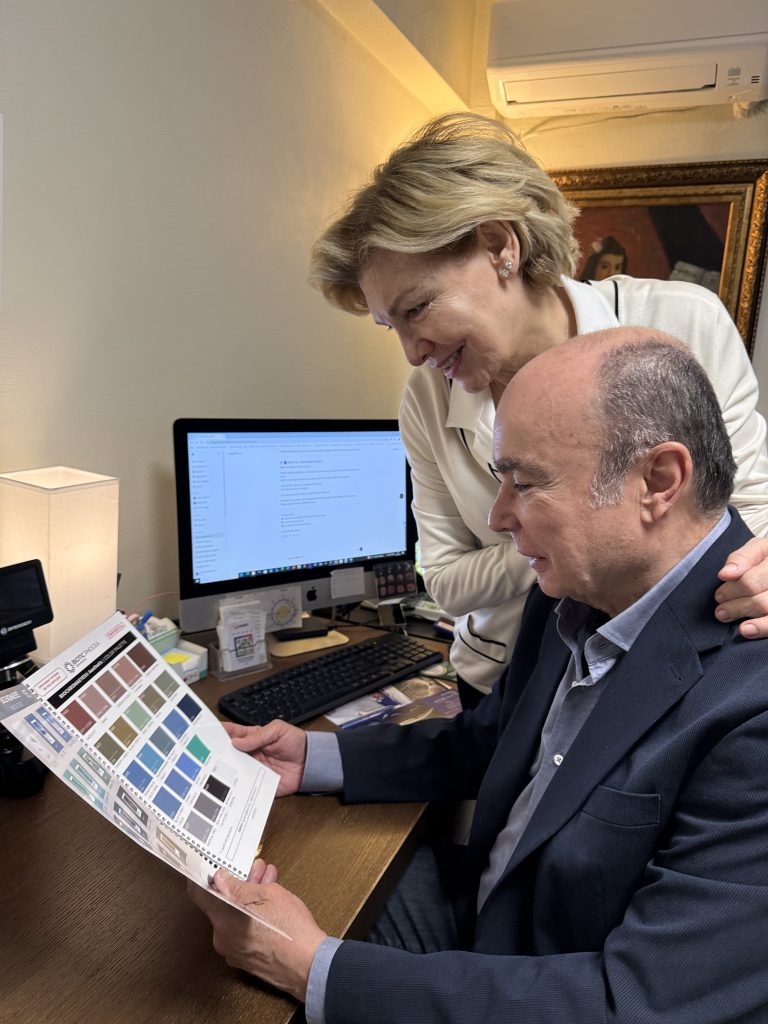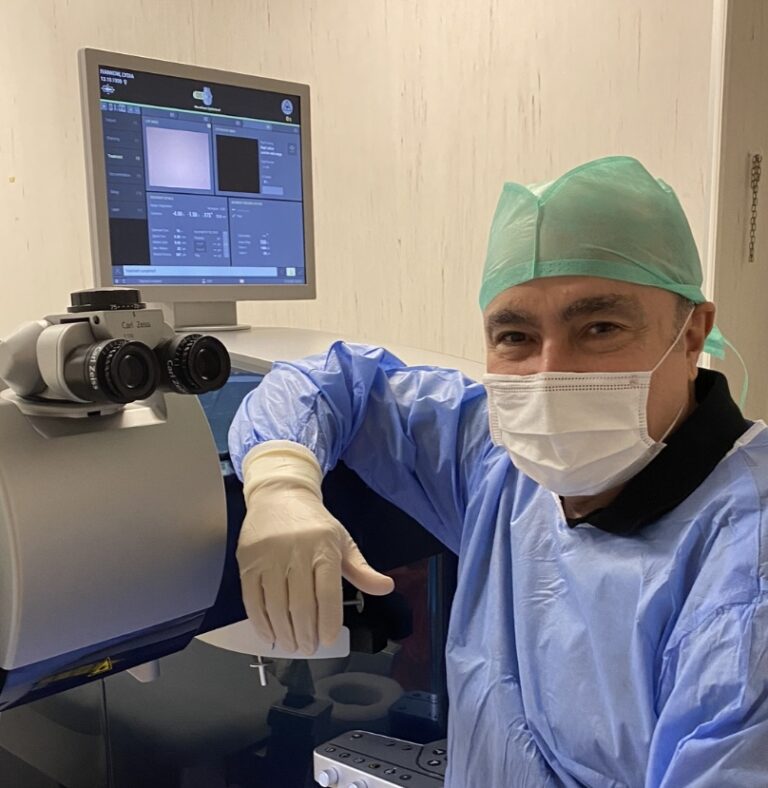
We have extensive experience with this lens.
The Scharioth Macula Lens (SML) is a special type of intraocular lens designed specifically to improve vision in patients with age-related macular degeneration (AMD). Here’s detailed information about the Scharioth SML:
### Overview
**Scharioth Macula Lens (SML):**
– **Design:** The SML is a magnifying intraocular lens that is implanted into the eye to enhance near vision for patients with AMD. It is particularly designed for those with moderate to severe AMD who still retain some functional central vision.
– **Function:** The SML magnifies images on the retina, making it easier for patients to read and perform tasks that require near vision, even with central vision impairment.
– **Placement:** It is typically implanted in the ciliary sulcus (the area behind the iris and in front of the natural lens or a previously implanted intraocular lens from cataract surgery).
### Features
1. **High Magnification:**
– The SML provides approximately 1.5x magnification, which is significant enough to enhance near vision without excessively distorting distance vision.
2. **Biocompatible Material:**
– Made from a hydrophilic acrylic material, the SML is biocompatible and safe for long-term implantation in the eye.
3. **Dual Lens Design:**
– The SML is designed to work in conjunction with a primary intraocular lens (IOL). It is implanted in addition to the standard IOL used during cataract surgery.
### Benefits
1. **Improved Near Vision:**
– The primary benefit of the SML is the improvement in near vision, allowing patients to read, use smartphones, and perform other close-up tasks with greater ease.
2. **Quality of Life:**
– By enhancing near vision, the SML can significantly improve the quality of life for AMD patients, enabling them to remain more independent in their daily activities.
3. **Non-Invasive Procedure:**
– The implantation of the SML is a relatively simple and minimally invasive procedure, often performed in an outpatient setting.
### Considerations
1. **Eligibility:**
– The SML is most suitable for patients with stable dry AMD or non-active wet AMD who have undergone cataract surgery and have an intraocular lens already implanted.
– Patients should have a sufficient level of remaining central vision to benefit from the magnification provided by the SML.
2. **Adaptation Period:**
– Post-surgery, patients may need some time to adapt to the magnified vision. Vision rehabilitation and training may be necessary to optimize the use of the SML.
3. **Combination with Other Treatments:**
– The SML can be combined with other treatments for AMD, including anti-VEGF injections for wet AMD, to provide comprehensive care.
4. **Risks and Complications:**
– As with any intraocular procedure, there are risks such as infection, inflammation, or dislocation of the lens. However, these complications are relatively rare and manageable with proper care and follow-up.
### Conclusion
The Scharioth Macula Lens (SML) represents a significant advancement in the treatment of AMD, offering patients an opportunity to regain functional near vision and improve their overall quality of life. A thorough evaluation by an ophthalmologist is essential to determine if the SML is a suitable option for a patient, considering the specific details of their eye health and vision needs.
![No Touch Lazer mi, SMILE Pro mu, FemtoLASIK mı? Hangi Göz Çizdirme Yöntemi Size Uygun? [2026 Rehberi]](https://www.kaskaloglu.com/wp-content/uploads/2025/02/smile-m-768x1024.jpg "No Touch Lazer mi, SMILE Pro mu, FemtoLASIK mı? Hangi Göz Çizdirme Yöntemi Size Uygun? [2026 Rehberi]")